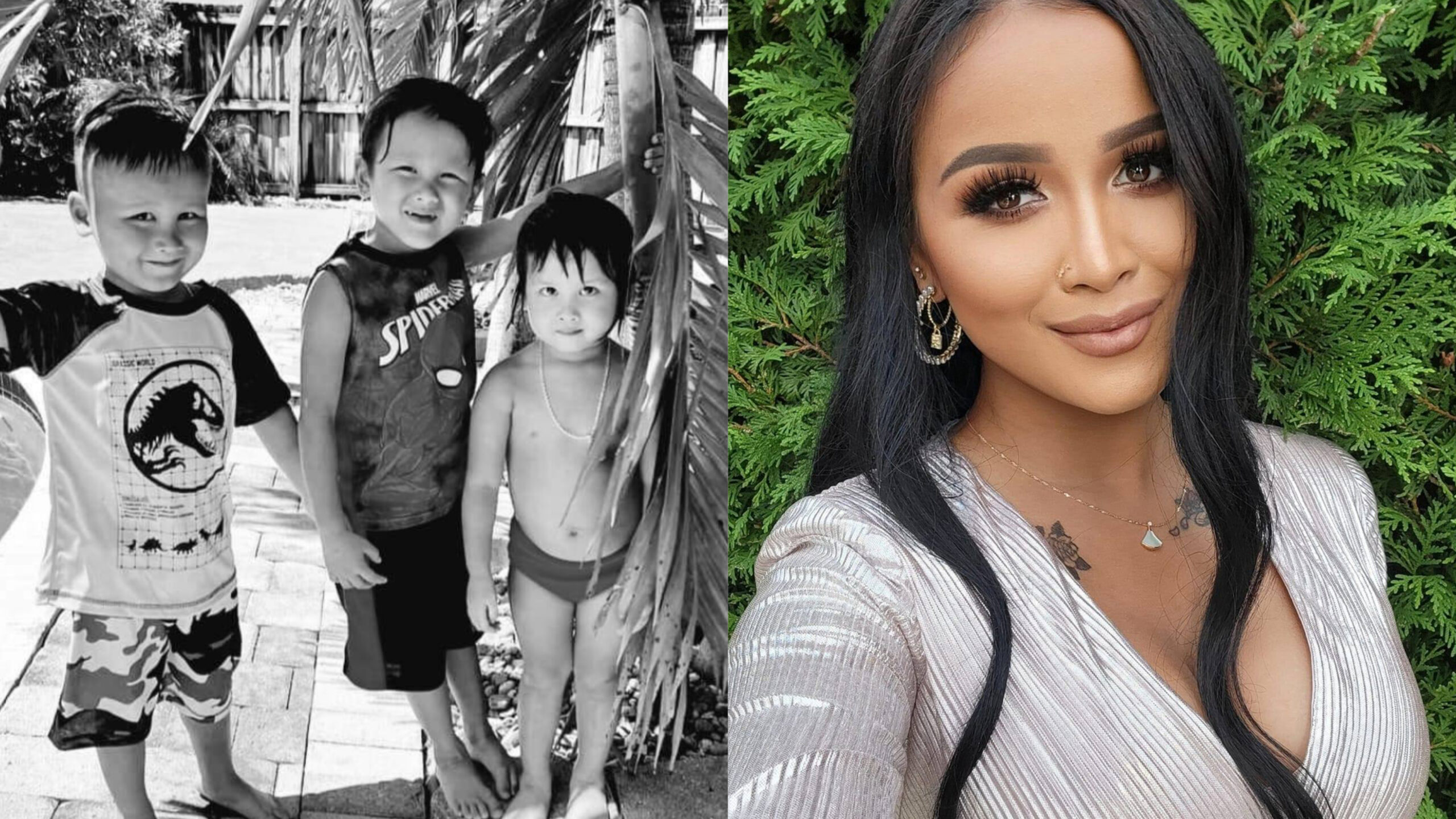
- In the mid-morning of July 1st, 2022, the couple was arguing. He threatened to kill himself in front of his kids and wife, before he followed through. He shot himself in the doorway of their bedroom with one of the two guns found on the premises later by police.
- When police arrived, Molly’s dad was to take the kids, but at the last moment, she decided to keep them with her.
- Molly and the children were attended to by a social worker who spent a few hours with them before leaving. Cops’ statement said that there was at least one relative in the home with them when the social worker left.
- Later in the afternoon, after the husband’s family members went live on Facebook about the tragedy as well as to tear down Molly, she called an uncle and said she couldn’t take it anymore and she was going to drown herself and her kids.
- Police found Molly’s car near Lake Vadnais (MN) along with what appears to be her children’s shoes a few hours later.
- Later in the late afternoon/early evening, they found the body of the first child who was pronounced deceased at the hospital. First responders did attempt CPR on site.
- The next day, Molly and the remaining two children were also found in the lake.
All of this is tragic, but what it doesn’t explain is why Molly would take her children with her. Many assumed that it was because she was selfish, that she must be an evil person. The family of Kos Lee were quick to jump onto Facebook Live to condemn and name-call Molly Cheng. Homewrecker. Slut. Cheater. Evil. That she was better off dead and no one would miss her.
Per the Facebook Live videos, there were accusations of cheating by his family, that the husband had caught her. There was supposed to be a family council meeting between the pair and their elders on July 2nd to discuss their marriage woes and perhaps even divorce.
But all this is one-sided, blind accusations. The full story, even as it continues to unravel, is more complicated; and it is a sharp look at us as a Hmong community and the ugly underbelly of how we treated orphans, adopted children, and colorism (the preference for lighter skin vs darker skin). Internally, many of our kind do not treat outliers within our community kindly. If we mean to stay within the community, without the protection and support of our families, being different can be incredibly isolating.
It isn’t a huge secret that Molly is adopted. She has been pretty open about that fact on her social media platforms. Her Hmong parents were unable to conceive so they purchased Molly from her biological parents back in the old country. Molly biologically is Burmese and Thai. She was darker skin-toned than the Hmong kids around her. She had the lovely big eyes and the smaller lips of her Burmese ancestors. In one of her videos on Tik Tok, she spoke about how that brought about a lot of bullying, but her mother loved and adored her, which made things better.
Molly as a little girl, singing in Hmong.
But a few years ago, her mother passed away. Her father remarried and left Molly on her own. Her new stepmother did not like her. A childhood friend of Molly’s told me that her father never cared much about her, that the positive parental relationship was mainly with her mother.
When she married Kos Lee, the family didn’t approve of her. There were accusations of cheating from the family early on, and friends say the family wasn’t afraid to be vocal about it. Whether the accusations were true or not, we’ll never know, but Molly felt everything she did was met with disapproval. She’d left her husband and returned multiple times. She felt as though both her father and her husband’s family didn’t love her children because of who she was — an outsider. Hmong by culture, but not by birth.
We can separate the facts from the hearsay. Once people are dead, all that is left is hearsay. What friends and family from both sides are saying can be taken however you’d like. The only things we do know as fact is the timeline of events and what we’ve seen on videos shared.
But here is another ugly truth. Molly Cheng’s life and death hold lessons for us as a community, especially in how critical and judgmental our community can be for those who do not look like us that live within our society. We are still very tribalistic, and even as that comes with many goods, it also comes with bad. We do not stand up and speak up enough against our own relatives when they are mistreating others. We fear rocking the boat. We fear that if we stand our ground, we’ll lose our extended family as well. Nobody wants to be on the outside. We see this a lot amongst our elder men who are too permissive and lax with their attitudes about abuse and misuse as long as the end serves them best; and we see this also amongst our women who don’t think twice to wag their tongues — whether in criticism or in passing rumors.
Molly’s possible thoughts on whether or not there would be anyone to love and care for her kids is a prime example of generational trauma. The acceptance of family passes on from parent to children.
And in this case, the unacceptance.
So did Molly think that it would be better for her to take her kids with her than to leave them behind to a family and society that would continue to ostracize and bully them? To a fate where love and care weren’t guaranteed? We can sit here and argue, but the truth is that at the end of the day, these are children most of us would have never met. Once the dust dies down, they would disappear from our memories, left to live with people we don’t know who had treated their mother unkindly.
Our society looks down on orphans as it is, shuffling them like unwanted baggage from one relative to another. But to be orphans of a mother whose own family wouldn’t love her? That’s a hard life to look at.
I remember as a kid when my parents were fighting, my mother would often tell me that if she left, there would be no one to love me. My father would remarry and leave me and my brother behind. Cruel as those words were, there was so much truth to it. The burden of children when a family splits traditionally was carried by the wife. Husbands had the option of turning his kids away when the wife is no longer in the picture. This, unfortunately, came true for Molly.
The death of her husband, Kos Lee, is also a huge lesson for all of us as well. The obvious is about mental health, but more importantly, it is about us as families and as community. Things were very wrong with that relationship for a long time. There were signs everywhere, but the toxicity didn’t just come from within. There were external factors that fed into increasing the drama and the trauma.
Kos Lee’s death also speaks to how we raised our sons too. The inability to cycle through emotions, to handle rejection, to manage ego. It bred and breeds toxicity. We, as a society,
must look at how we are raising our boys. Hmong men threatening suicide to control Hmong women is not a new thing. It is the ultimate level of control and manipulation. It is the ultimate guilt trip and revenge. It is a scar on her to live with the remainder of her days, the price of his life.
Friends say this is also not the first time Kos had threatened suicide. These were red flags that were not given enough attention. In general, our younger Americanized generation and our women are more likely to seek Mental Health advocacy, but Hmong men lag behind when it comes to taking mental healthcare seriously. This too must change. We all need to advocate for better mental health care for Hmong men, but also to encourage open discussions amongst men about healthier ways to manage their issues.
In the end, perhaps we as a society and as extended family also hold some responsibility for what happened. Beyond the blood and tears is a mirror, and it can be difficult to take hard looks at ourselves.