
-
 You must be logged in to see or use the Shoutbox. Besides, if you haven't registered, you really should. It's quick and it will make your life a little better. Trust me. So just register and make yourself at home with like-minded individuals who share either your morbid curiousity or sense of gallows humor.
You are using an out of date browser. It may not display this or other websites correctly.
You should upgrade or use an alternative browser.
You should upgrade or use an alternative browser.


Turd Fergusen
Veteran Member
It really, really, really has. My parents used to get it when I was a teen in the 90's and I used to like reading it, thinking it was one of the more trustable news magazines. I think I'd trust the National Enquirer more at this point.Time has become a total garbage rag

Future_Milf
George Floyd got EVERYTHING he deserved.
This bitch is getting too much attention. Who seriously thinks it's a good idea to try to travel through Russia with drugs?

Satanica
Veteran Member
I still don't believe she didn't know she had them with her. You KNOW what sort of country you're going to and you don't double and maybe even triple check your damned luggage? I know I would take every precaution not to end up in a foreign jail, especially in countries that don't particularly like the USA.This bitch is getting too much attention. Who seriously thinks it's a good idea to try to travel through Russia with drugs?
Future_Milf
George Floyd got EVERYTHING he deserved.
So would I, but people really into pot don't think it's a big deal. Personally, it doesn't do shit for me and I think it should be legal, but it's beyond stupid to think that a country that isn't fond of Americans will make exceptions like the US does.I still don't believe she didn't know she had them with her. You KNOW what sort of country you're going to and you don't double and maybe even triple check your damned luggage? I know I would take every precaution not to end up in a foreign jail, especially in countries that don't particularly like the USA.
Turd Fergusen
Veteran Member
Facing 9.5yrs...

 nypost.com
Russian court finds Brittney Griner guilty of cannabis possession, smuggling
A Russian court found Brittney Griner guilty of cannabis possession and smuggling — despite her claims that she “made an honest mistake” and her tearful pleas for mercy.
A verdict is expected to be announced imminently. The 31-year-old athlete faces 9 ½ years in prison.
When given a chance to speak during Thursday’s hearing, Griner, 31, with her voice quivering, acknowledged her “mistake” and pleaded for leniency.
“I want the court to understand that this was an honest mistake that I made while rushing, under stress, trying to recover from COVID and just trying to get back to my team,” Griner said, referring to her packing vape cartridges in her luggage on her way to Russia in February.
Brittney Griner sentenced to 9 years for cannabis possession, smuggling in Russia
Prosecutors confirmed a nearly decade-long sentence for the WNBA player in Thursday’s closing arguments.
nypost.com
Satanica
Veteran Member
Brittney Griner has been found guilty in a Russian court on drug charges.
The WNBA star has been found guilty in a Russian court of drug smuggling with criminal intent.
Earlier Thursday, prosecutors asked a judge to sentence her to more than nine years in prison on drug charges coupled with a $16,590 fine.
[....]
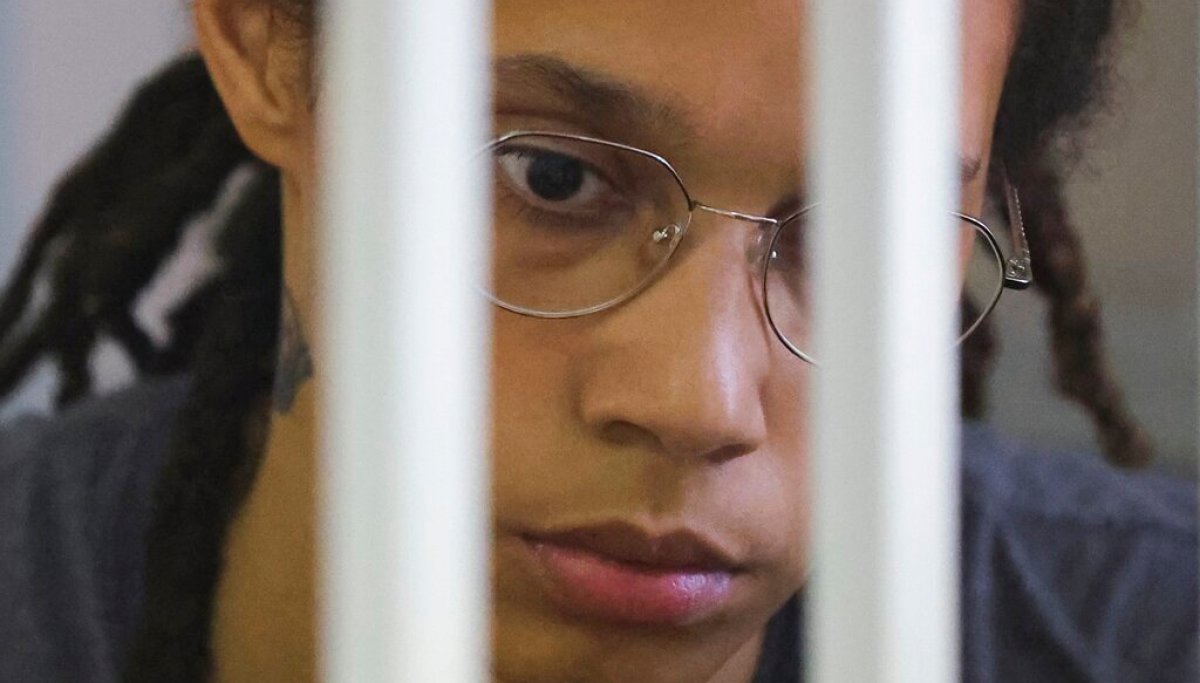
Brittney Griner trial: WNBA star found guilty and sentenced to nine years
WNBA star Brittney Griner was found guilty on Thursday of smuggling drugs into Russia and was sentenced to nine years in a penal colony. Griner, a
 www.washingtonexaminer.com
We were posting at the same time Turd, lol.
Satanica
Veteran Member
Sentenced to 9 years.

 news.yahoo.com
Griner sentenced to nine years in prison in Russia
KHIMKI, Russia (Reuters) -A Russian court on Thursday sentenced U.S. basketball star Brittney Griner to nine years prison on drugs charges, after finding her guilty of narcotics possession and smuggli...

That eyeroll is for Time Magazine @BBBLUE77, not you! 
Girl got nine years in the Russian klink.

 www.foxnews.com
Girl got nine years in the Russian klink.
Brittney Griner trial: Russian court hands down verdict, sentence in WNBA star's case
WNBA star Brittney Griner was given a verdict in Russian court on Thursday weeks after she pleaded guilty to a drug charge. She has been detained in Russia since February.
www.foxnews.com

Turd Fergusen
Veteran Member
I got a good laugh when I saw her defense to a RUSSIAN COURT was it was an "honest mistake"! That's not how shit works over there. Not at all. She's lucky they took 6 months off.

ronda2711
Well-Known Member

Satanica
Veteran Member
Russia is among the countries with the highest number of prisoners. Hundreds of thousands of inmates are supervised by an elaborate apparatus of the Federal Penitentiary Service (FSIN). This extended system is used as a tool for exercising control over society and solidifying the system of power.
[....]
Due to the absence of a major overhaul of the prison service, whose institutions and code of conduct date back to the time of the Soviet Gulag, the prison system is an excellent example of pathologies that are also present in other elements of the Russian state apparatus. These include the poor state of infrastructure, endemic corruption and the primacy of informal rules over the rule of law, consent to harsh exploitation of working prisoners and the omnipotence of the coercion apparatus.
[....]
The present number of inmates in Russia’s prisons is among the lowest in the country’s history and has been gradually declining over recent years. A decade ago, the number of prisoners in Russia was almost double the present figure ( 893,000 in 2008).
The decrease in the number of inmates has mainly been linked to the fact that the courts pronounce prison sentences for minor crimes less frequently and tend to apply other penalties (such as non-custodial sentences or community service). It has also been caused by demographic changes in Russian society: depopulation and an ageing population . Other factors include the closing of a significant number of penal colonies with the least strict regime (over the last eight years almost a quarter of the total number of such colonies were closed down)[2]. As a consequence, prison overcrowding decreased only marginally and there has been no evident improvement in prison conditions. The recidivism ratio also remains very high: around 63% of inmates in Russian prisons are reoffenders[3].
The reason behind the high number of prisoners in Russia is the repressive nature of the Russian judiciary as a whole. Most recent amendments to the penal code have toughened the penalties[4]. Figures compiled by the Investigative Committee for 2015 show that acquittals accounted for a mere 0.4% of court rulings.
This is why the fate of the accused is decided by prosecutors during their investigations. As far as the reasons for imprisonment are concerned, the largest group of prisoners are criminal prisoners, most of whom were convicted for murder (27.8% of inmates). A similar proportion of prisoners are serving their sentences for drug dealing (25%)[5], which likely results from the fact that the proceedings regarding possession of drugs are straightforward and investigators use them as an easy means of demonstrating the activity and efficiency of the prosecution bodies.
[....]
The Russian penitentiary system is organised in a different manner to corresponding penal systems in most countries: instead of cells in prisons the inmates are housed in barracks in penal colonies. In total, there are 869 such colonies of various regimes scattered across Russia, eight prisons and 315 remand centres. The geographical location of penal colonies is linked to the concept of economic development adopted back in Soviet times, when prisoners were used as forced labour, such as during the construction of large-scale investments carried out by the Soviet state including the White Sea–Baltic Canal and the Baikal–Amur Mainline (BAM), as well as in forestry in harsh weather conditions – in Karelia, for instance. Even today, the largest number of penal colonies is located in regions that are rich in natural resources (mainly forests), such as Krasnoyarsk Krai and Perm Krai, or in highly industrialised ones, such as Sverdlovsk Oblast, Kemerovo Oblast and Primorsky Krai.
[....]
Due to the geographical location of the penal colonies, prisoners serve their sentences far from their home towns. Those penal colonies that are located in remote areas far from densely populated regions usually have harsher conditions: problems with running water and heating are common. Due to their remote location and inaccessibility, these colonies are less frequently inspected by external bodies and the control mechanisms are weak.
[....]
In Russia, custody is the most popular preventive measure (it is more frequently used than bail or a ban on leaving the country). In recent years, it has become increasingly popular[8] (17.3% of all imprisoned individuals are held in remand centres). As far as the conditions of imprisonment are concerned, the time the suspect spends in the remand centre is often considered the harshest (a system was recently introduced according to which one day spent in a remand centre counts as one and a half days spent in the facility in which the prisoner serves their actual sentence[9]). The same applies to the so-called transfer stage, or the time during which the convict is being transported to their penal colony (in Russian: etap).
[....]
The conditions in which the prisoners serve their sentences depend on the type of the specific penal colony. In Russia, there are four types of penal colonies each with a different regime. In the least strict penal colonies, the so-called colonies-settlements, the inmates can freely move around the facility, they are usually housed in large barracks, can leave the colony on a pass quite frequently, meet with their relatives and wear civilian clothing. In ordinary regime penal colonies, the supervision by the guards is much stricter, the inmates are housed in large barracks with up to 150 beds in each, are under constant supervision and cannot move around the facility freely. In strict regime and special regime penal colonies, the inmates face more restrictions, they are housed in locked cells usually with 20-50 other prisoners. Due to overcrowding, in most colonies the required standard of two square meters of space per inmate, which is stipulated in Russian law, is usually not met. It should be noted that this standard is 50% of the standard stipulated in the European Convention on Human Rights which Russia has ratified[11]. Another important factor that impacts on prison conditions is the policy of the local FSIN officials and of the governor of the specific prison.
The conditions in which the inmates serve their sentences in penal colonies are also impacted by the poor state of infrastructure that the FSIN has at its disposal. Most facilities were built before 1970 and a large portion of them date back to tsarist times. In most prisons, the state of repair and the overcrowding make it difficult for the inmates to maintain basic hygiene. This leads to regular outbreaks of epidemics. For years, one of the major problems in Russian prisons has been prisoners developing AIDS and tuberculosis. According to data compiled by the FSIN, up to a third of deaths in prisons are caused by AIDS. Despite this, over the last couple of years the mortality rate among Russia’s prisoners has declined[12]. It is extremely difficult to quote any estimates regarding prison mortality rate. Human rights defenders claim that the health statistics are not credible because most cases of prisoners falling ill are not reported[13].
[....]
More at the link.
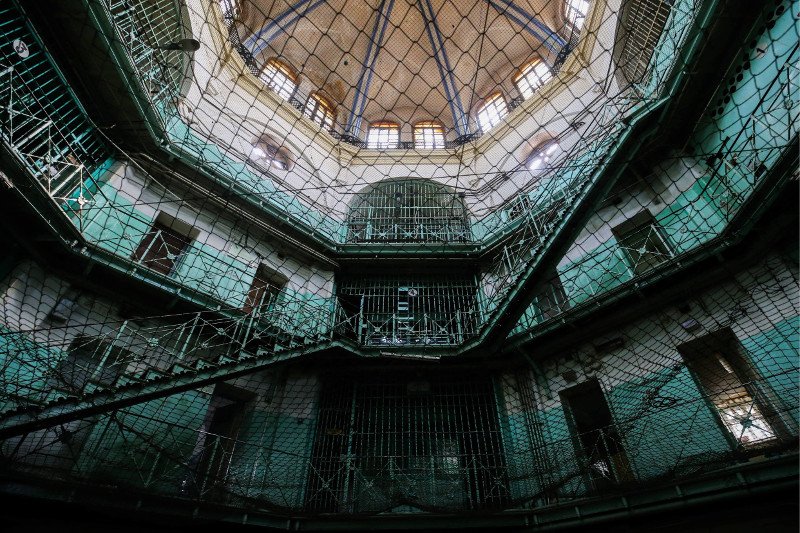
Russia behind bars: the peculiarities of the Russian prison system
Russia is among the countries with the highest number of prisoners. Hundreds of thousands of inmates are supervised by an elaborate apparatus of the Federal Penitentiary Service (FSIN). This extended system is used as a tool for exercising control over society and solidifying the system of...

thuumpr
Veteran Member
Next thing you know, a box of Wheaties...The cover of Time magazine?!? Are you shitting me??! https://abc13.com/brittney-griner-time-magazine-cover-russia-prisoner-exchange/12084005/

ronda2711
Well-Known Member
-------------
the anthem until 1944
the original
styled after the French Anthem of the Paris Commune of 1870
----------------
the anthem until 1944
the original
styled after the French Anthem of the Paris Commune of 1870
----------------
Turd Fergusen
Veteran Member
Kamala put most of them in jail BTW....
 nypost.com
Elon Musk gives scalding take on Biden’s push to free Brittney Griner
Elon Musk questioned President Joe Biden’s ongoing effort to release WNBA star Brittney Griner from a Russian prison while thousands are locked up in the US for the same offense.
Griner was sentenced to nine years in Russia for cannabis possession and Musk noted others locked up on American soil aren’t getting the same attention from the White House.
“If the president is working so hard to free someone who is in jail in Russia for some weed, shouldn’t we free people in America?” the Tesla CEO asked on an episode of the “Full Send” podcast this week.
“There are people in jail in America for the same stuff. Shouldn’t we free them too? My opinion is that people should not be in jail for non-violent drug crimes.”
Elon Musk gives scalding take on Biden’s push to free Brittney Griner
“If the president is working so hard to free someone who is in jail in Russia for some weed, shouldn’t we free people in America?” the Tesla CEO asked on an episode of the “…
nypost.com
Turd Fergusen
Veteran Member
Russian court rejects Brittney Griner’s appeal of 9-year sentence
A Russian court on Tuesday rejected Brittney Griner’s appeal after the jailed WNBA star begged for forgiveness for her “mistake” — upholding her nine-year sentence for possessing and smuggling vape cartridges containing cannabis oil.
Griner and her lawyers had asked for acquittal or at least a more lenient sentence, which they said was disproportionate to the offense and at odds with Russian judicial practice.

Russian court rejects Brittney Griner’s appeal of 9-year sentence
A Russian court on Tuesday rejected Brittney Griner’s appeal after the jailed WNBA star begged for forgiveness for her “mistake” — upholding her nine-year sentence for possessing and smuggling vape…
nypost.com
Turd Fergusen
Veteran Member
Brittney Griner’s grim penal colony fate: ‘You’re starved just by the food’
Brittney Griner will endure merciless conditions inside a Russian penal colony — where rancid food, extreme isolation and tyrannical wardens await the WNBA star, former Russian prison inmates, their relatives and penitentiary experts told The Post.
Former US Marine Trevor Rowdy Reed, who spent nearly 1,000 days detained in Russia, was freed in April in exchange for Konstantin Yaroshenko, a Russian pilot serving a 20-year prison sentence for conspiring to smuggle more than $100 million of cocaine into New York.
Reed was accused of assaulting two Moscow police officers in August 2019 and spent 11 months in a pretrial detention center in Moscow until a Russian court meted out a nine-year sentence in 2020. He was later shipped 350 miles away to a penal colony in the remote Russian republic of Mordovia, where he survived nine agonizing months until he was swapped this year.
“You gotta understand, the labor camps in Mordovia, these are pre-Stalin-era prisons, these were literally referred to as gulags,” Trevor’s father, Joey Reed, told The Post. “And even though there’s a federal authority for prisons, each warden has wide leeway to do whatever they want until it makes someone angry or leads to bad press.”

Brittney Griner’s grim penal colony fate: ‘You’re starved just by the food’
Brittney Griner will endure merciless conditions inside a Russian penal colony — where rancid food, extreme isolation and tyrannical wardens await, ex-inmates, their relatives and experts told The …
nypost.com
thuumpr
Veteran Member
Skip the Wheaties... Next thing is a made for TV movie.Next thing you know, a box of Wheaties...
This whole thing just might make a church-going woman again, what with watching the good Lord answering Brittney's prayers to not have to hear the National Anthem and all... 
Satanica
Veteran Member
Brittney Griner, the WNBA star who was held for months in Russian prisons on drug charges, was released Thursday in a one-for-one prisoner swap for international arms dealer Viktor Bout.
"She's safe. She's on a plane. She's on her way home," President Biden said in a tweet.
CBS News first learned of the swap early Thursday from a U.S. official. The one-for-one exchange agreement negotiated with Moscow in recent weeks was given final approval by President Biden within just the last week, according to sources familiar with the deal. The swap took place on Thursday in the United Arab Emirates.
Five former U.S. officials told CBS News the agreement had been reached as of last Thursday.
[....]
Speaking shortly after Griner was released, Mr. Biden said at the White House that he was "glad to be able to say Brittney is in good spirits," and that she was looking forward to getting home. The president dismissed the "show trial in Russia" that landed her in prison and said "she didn't ask for special treatment."
To secure Griner's release, the president ordered Bout to be freed and returned to Russia. Mr. Biden signed the commutation order cutting short Bout's 25-year federal prison sentence.
Notably, the Griner-for-Bout exchange leaves retired U.S. Marine Paul Whelan imprisoned in Russia. Whelan has been in Russian custody for nearly four years. He was convicted on espionage charges that the U.S. has called false.
"We've not forgotten about Paul Whelan," Mr. Biden said Thursday, adding "we will never give up" on securing his release.
[....]
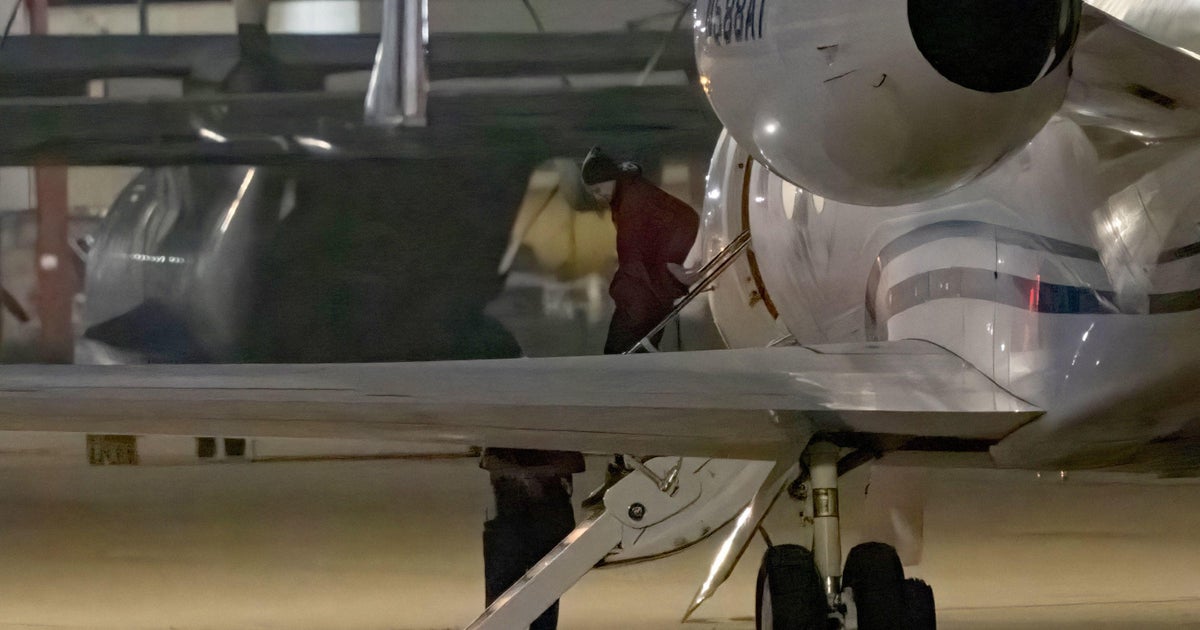
Brittney Griner arrives in U.S. following her release by Russia in prisoner swap for arms dealer Viktor Bout
Her plane landed in San Antonio, Texas. Griner was freed from Russia in exchange for notorious international arms dealer Viktor Bout.
 www.cbsnews.com
Turd Fergusen
Veteran Member
The "Merchant of Death". Seems like a fair trade ...
Blunderbuss Firozabad
Made of Pumpkin pie
Viktor Bout, free to return to selling arms to corrupt nations ( previously to Muammar Gaddafi, Columbia's FARC) to be used against the personnel the United States sends to those nations. (Embassies, DEA)
Unbelievably poor decision.
Last edited:
So a US Marine sits in Russian prison, but the spoiled, bitter, nasty, unpatriotic Griner gets to come home? Because we traded the "Merchant of Death" for her marijuana habit? I'm thoroughly disgusted by* the current Administration. Service members before professional sports stars, always!
ETA: Fixed my less than graceful phrasing.
ETA: Fixed my less than graceful phrasing.
Last edited:

Latest posts
-
 DeLand Woman Had Stepfather Killed For $750,000 Insurance Payout
- Latest: Sugar Cookie
-
Man Was Out ‘Hunting’ For Someone To Shoot When He Killed 9YO Boy
- Latest: Sugar Cookie
-
Mother Plunges Car With 2 Children Inside Into Flooded Creek
- Latest: Sugar Cookie

