Alxprkrkrls
Trusted Member
yeah I don’t think anyone is buying itAgree @Alxprkrkrls but the bullshit seems to be working. Not that he won't be sentenced accordingly, but it's getting zero media coverage because it doesn't fit the narrative.
You must be logged in to see or use the Shoutbox. Besides, if you haven't registered, you really should. It's quick and it will make your life a little better. Trust me. So just register and make yourself at home with like-minded individuals who share either your morbid curiousity or sense of gallows humor.
yeah I don’t think anyone is buying itAgree @Alxprkrkrls but the bullshit seems to be working. Not that he won't be sentenced accordingly, but it's getting zero media coverage because it doesn't fit the narrative.
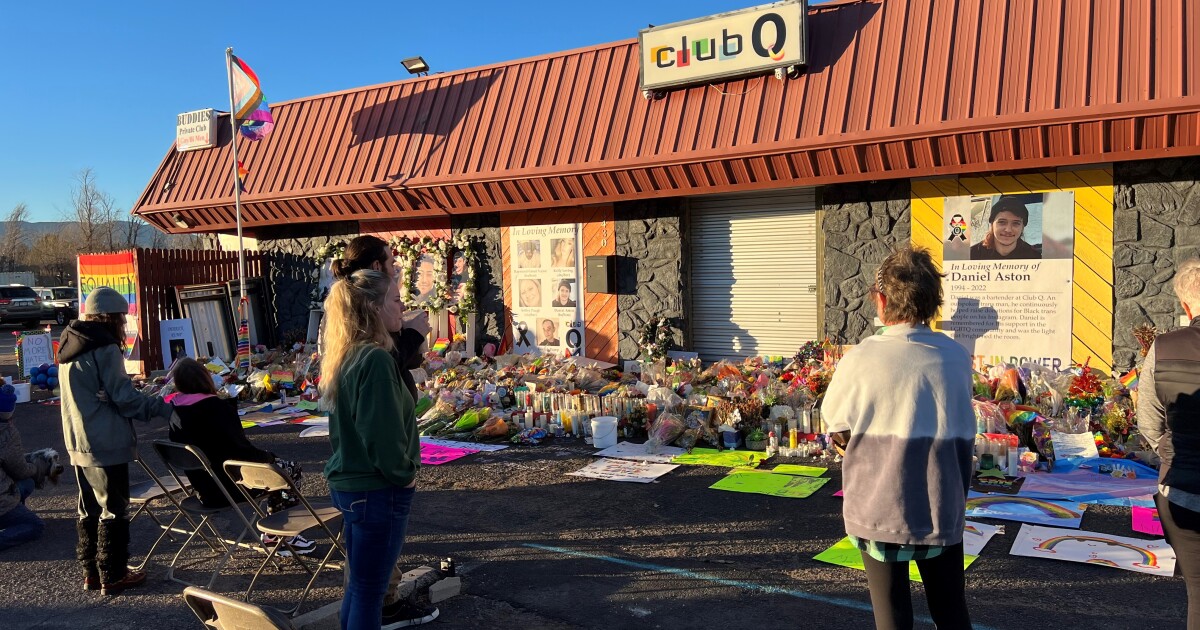
The suspect accused of killing five people and injuring more than a dozen others in a mass shooting at a LGBTQ+ club in Colorado Springs last month was charged by prosecutors with 305 counts, including first-degree murder, assault and bias-motivated crimes.
The charges against 22-year-old Anderson Lee Aldrich, which were announced Tuesday morning during a formal filing of charges court hearing, also include dozens of sentence enhancers which will allow prosecutors to seek heavier penalties under Colorado law should they be convicted, according to court records released during the hearing.
The suspect faces 10 counts of first-degree murder, divided into 5 counts each of first-degree murder after deliberation and first-degree murder—extreme indifference, which carry a sentence of life in prison without the possibility of parole. He also faces dozens of counts for attempted first-degree murder, assault and bias-motivated crimes.
"I think the message that we sent is obviously, when you file 305 counts in a case... that tells the public, this community, this state and this nation, that we are taking this case as serious as we possibly can, meaning that we are going to prosecute this case to the fullest extent of the law," said Fourth Judicial District Attorney Michael Allen during a news conference after the court hearing.
Allen did not detail the charges in Tuesday's hearing but said they included “many counts of bias motivated crimes.” He declined to discuss what evidence prosecutors found to back the hate crimes charges.
He also said it was "almost likely" that the number of charges in the case could be amended if officials identify additional victims from the shooting.
“We are not going to tolerate actions against community members based on their sexual identity,” said Allen. “Members of that community have been harassed, intimidated and abused for too long.”
Colorado prosecutors will need concrete evidence such as statements the suspect may have made about the shooting, Frank Pezzella, an associate professor at John Jay College of Criminal Justice, said.
“It’s got to be more than he shot up Club Q,” he said.
Police have still not confirmed a motive in the case, but Club Q owners and the LGBTQ+ community called the shooting a “hate attack” and officials said they would treat the investigation as one potentially involving a hate crime.
A judge dismissed the 2021 kidnapping case against the Colorado gay nightclub shooter even though she had previously raised concerns about the defendant stockpiling weapons and explosives and planning a shootout, court transcripts obtained Friday by The Associated Press reveal.
Relatives, including the grandparents who claimed to have been kidnapped, had also told Judge Robin Chittum in August last year about Anderson Aldrich’s struggles with mental illness during a hearing at which the judge said Aldrich needed treatment or “it’s going to be so bad,” according to the documents.
Yet no mention was made during a hearing this July of the suspect’s violent behavior or the status of any mental health treatment.
And Chittum, who had received a letter late last year from relatives of Aldrich’s grandparents warning the suspect was certain to commit murder if freed, granted a defense attorney’s motion to dismiss the case as a trial deadline loomed and the grandparents had stopped cooperating.
The revelation that Chittum regarded the defendant as a potentially serious threat adds to the advance warnings authorities are known to have had about Aldrich’s increasingly violent behavior and it raises more questions about whether the recent mass shooting at Club Q in Colorado Springs could have been prevented.
Chittum’s comments in Aldrich’s kidnapping case had previously been under a court seal that was lifted last week at the request of prosecutors and news organizations including the AP. Chittum’s assistant, Chad Dees, said Friday that the judge declined to comment.
“You clearly have been planning for something else,” Chittum told Aldrich during the August 2021 hearing, after the defendant testified about an affinity for shooting firearms and a history of mental health problems.
“It didn’t have to do with your grandma and grandpa. It was saving all these firearms and trying to make this bomb, and making statements about other people being involved in some sort of shootout and a huge thing. And then that’s kind of what it turned into,” the judge said.
Aldrich — whose defense lawyers say is nonbinary and uses they/them pronouns — spoke to Chittum in court that day about repeated abuse as a young child by their father and longtime struggles with severe post-traumatic stress disorder and bipolar disorder, the transcript shows.
(The vast majority of people with mental illnesses are not violent, studies show, and experts say most people who are violent do not have mental illnesses. Additionally, nonbinary people and advocates warn against making assumptions about people with nontraditional gender identities.)
Aldrich, who was largely raised by their grandparents, wanted to join the military as a teenager but decided it wasn’t going to happen, the transcripts show. The suspect described refusing to take medications and then “getting on track” after moving to Colorado, obtaining a medical marijuana license and starting college, according to the transcripts.
“I also went to the (shooting range) as often as I could since the age of 16,” Aldrich testified, the transcripts show. “My mom and I would go … sometimes multiple times a week and have fun shooting. This is a major pastime for me. Going to school, working and then relaxing at the shooting range.”
Aldrich said they went to Dragonman’s shooting range east of Colorado Springs, where the dirt driveway was lined by mannequins that looked bloodied Friday. Nearby were rusted vehicles, some peppered in bullet holes. Two people who appeared to work at the range said they did not know Aldrich and declined further comment.
Shooting at the range “was highly therapeutic for me, and was a great way to spend spare time,” Aldrich told Chittum.
When Aldrich’s grandparents made plans to move to Florida, the suspect became despondent. Leading up to the 2021 confrontation with authorities, Aldrich started drinking liquor regularly and smoking heroin, dropped out of school and quit working, the transcript shows.
The charges in that case against Aldrich — who had stockpiled explosives and allegedly spoke of plans to become the “next mass killer” before engaging in an armed standoff with SWAT teams — were thrown out during a four-minute hearing this past July at which the prosecution didn’t even argue to keep the case active.
The prosecution was the responsibility solely of the district attorney, said Ian Farrell, associate professor at the University of Denver Sturm College of Law, noting that judges like Chittum have no power to force charges.
“Since a deadline for proceeding with (Aldrich’s) trial was coming up and the prosecution clearly was not ready to proceed … the trial judge had no choice but to dismiss the case,” Farrell said.
Judges can appoint special prosecutors in extreme situations, such as when a decision not to prosecute is done in bad faith, Farrell said. But the 2021 case did not appear to rise to that bar, he said, because witnesses in the case were unavailable.
The suspect accused of using an AR-style rifle to terrorize a Colorado LGBTQ nightclub – killing five people and injuring 19 others – pleaded guilty to five counts of first-degree murder and 46 counts of attempted murder.https://www.cnn.com/2022/11/22/us/c.../index.html?cid=external-feeds_iluminar_yahoo
Anderson Lee Aldrich, 23, was sentenced Monday to five consecutive life sentences without the possibility of parole for the 2022 massacre at Club Q in Colorado Springs, Colorado.
https://twitter.com/CoCourts/status/1673385436473860118?cxt=HHwWrICxlYjMh7kuAAAA
Judge Michael McHenry also sentenced Aldrich to an additional 2,208 years in prison for the attempted murder charges. Aldrich also received a four-year sentence for bias-motivated charges, which are akin to hate-crime charges in other states.
“That is the longest sentence ever achieved in the Fourth Judicial District and the second, to my knowledge, longest sentence ever achieved in the state of Colorado, second only to the sentence achieved in the Aurora theater shooting case,” Fourth Judicial District Attorney Michael Allen said in a news conference after the sentencing.
Prosecutors could not seek the death penalty because in 2020, Colorado abolished the death penalty – becoming the 22nd state to do so.
During Monday’s news conference, officials confirmed a federal investigation has been opened into the attack and remains ongoing. The fact that the death penalty could be attached to a possible federal case was a motivator for the shooter’s plea in the state’s case, the prosecution said Monday. Capital punishment remains legal for federal cases.
“The death penalty still matters even if it’s not law in the state of Colorado,” Allen said. “The threat of the death penalty in the federal system (was) a big part of what motivated this defendant to take this plea in our case.”
“Cases like this are why the death penalty should exist in the state of Colorado, the victims in this case deserve the ultimate punishment that the law can provide,” he said.
The Colorado shooter who killed five people at Club Q, an LGBTQ+ nightclub in Colorado Springs, in 2022 has been charged with federal hate crimes and other federal charges, newly filed court documents show.
Anderson Lee Aldrich, 23, has pleaded guilty in state court to five counts of murder and 46 counts of attempted murder, as well as having pleaded no contest to two counts of bias-motivated crimes, in the mass shooting that killed five people at Club Q in November 2022.
Aldrich was sentenced to life in prison and was then transferred from a Colorado prison to the Wyoming State Penitentiary late last year.
Aldrich has now been charged with five federal hate crime enhancements including five counts of murder with a firearm and an additional 69 cases of attempted murder or commission of a violent crime. Aldrich is being represented by a federal public defender in court. The Federal Public Defender's Office said it does not comment on ongoing cases.
In the new federal case, Aldrich has pleaded guilty, but federal court documents show that Aldrich's attorney and the U.S. Attorney's Office have negotiated a plea deal resulting in "multiple concurrent life sentences plus additional consecutive sentences totaling 190 years."
In total, Aldrich faces 74 federal charges, about 50 of which are related to alleged hate crimes.