[....]
But as cases of the coronavirus have skyrocketed, there's new thinking about the benefits that masks could offer in slowing the spread. The CDC says it is now reviewing its policy and may be considering a recommendation to encourage broader use.
At the moment, the CDC website says the only people who need to wear a face mask are those who are sick or are caring for someone who is sick and unable to wear a mask.
But in an
interview with NPR on Monday, CDC Director Robert Redfield said that the agency is taking another look at the data around mask use by the general public.
"I can tell you that the data and this issue of whether it's going to contribute [to prevention] is being aggressively reviewed as we speak," Redfield told NPR.
And Tuesday, President Trump weighed in suggesting people may want to wear scarves. "I would say do it," he said, noting that masks are needed for health care workers. "You can use scarves, you can use something else," he said.
On Tuesday Dr. Deborah Birx, who serves as the White House's coronavirus response coordinator, said the task force is still discussing whether to change to the recommendation on masks.
Other prominent public health experts have been raising this issue in recent days. Wearing a mask is "an additional layer of protection for those who have to go out," former FDA Commissioner Scott Gottlieb told NPR in an interview. It's a step you can take — on top of washing your hands and avoiding gatherings.
In a
paper outlining a road map to reopen the country, Gottlieb argues that the public should be encouraged to wear masks during this current period of social distancing, for the common good.
"Face masks will be most effective at slowing the spread of SARS-CoV-2 if they are widely used, because they may help prevent people who are asymptomatically infected from transmitting the disease unknowingly," Gottlieb wrote. Gottlieb points to South Korea and Hong Kong — two places that were shown to manage their outbreaks successfully and where face masks are used widely.
A prominent public health leader in China also argues for widespread use of masks in public. The director general of the Chinese Center for Disease Control and Prevention, George Gao,
told Science that the U.S. and Europe are making a "big mistake" with people not wearing masks during this pandemic. Specifically, he said, mask use helps tamp down the risk presented by people who may be infected but aren't yet showing symptoms.
If those people wear masks, "it can prevent droplets that carry the virus from escaping and infecting others," Gao told
Science.
The argument for broadening the use of face masks is based on what scientists have learned about asymptomatic spread during this pandemic.
It turns out that many people who are infected with the virus
have no symptoms — or only mild symptoms.
What this means is that there's no good way to know who's infected. If you're trying to be responsible when you go out in public, you may not even know that you're sick and may be inadvertently shedding the virus every time you talk with someone, such as a grocery store clerk.
"If these asymptomatic people could wear face masks, then it could be helpful to reduce the transmission in the community," says
Elaine Shuo Feng, an infectious disease epidemiology researcher at the Oxford Vaccine Group at the University of Oxford.
Given the reality of asymptomatic spread, masks may be a good socially responsible insurance policy, Gottlieb argues. "[Wearing masks] protects other people from getting sick from you," he says.
But there is still a
big concern about mask shortages in the United States. A survey released Friday from the
U.S. Conference of Mayors finds that about 92% of 213 cities did not have an adequate supply of face masks for first responders and medical personnel.
At this point, experts emphasize that the general public needs to leave the supply of N95 medical masks to health care workers who are at risk every day when they go to work.
And supplies are also tight for surgical masks, the masks used everywhere from dentists' offices to nail salons and that are even handcrafted.
"We need to be very mindful that the supply chain for masks is extremely limited right now," Gottlieb says. "So you really don't want to pull any kind of medical masks out of the system."
Given current shortages, it may be too soon to tell the general public to start wearing surgical masks right now. "We certainly don't have enough masks in health care," says
William Schaffner, an infectious disease expert at Vanderbilt University. "I wouldn't want people to go out and buy them now, because we don't want to siphon them off from health care."
Where does that leave us?
Some research has shown that cotton T-shirt material and tea towels might help block respiratory droplets emitting from sick people, even if the effect is minimal.
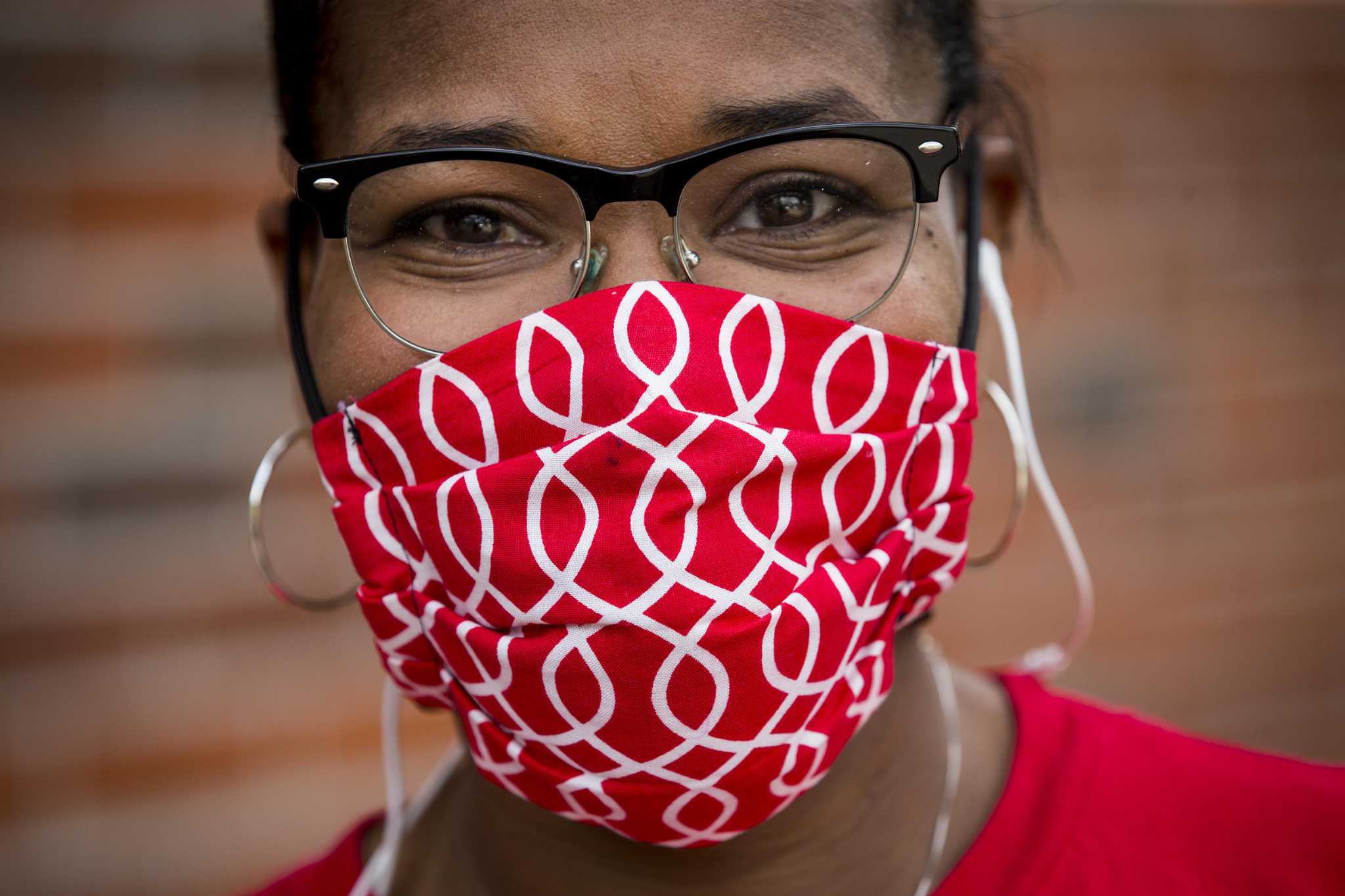
"Homemade masks, shawls, scarves and anything that you can conjure up at home might well be a good idea," says Schaffner. "It's not clear that it's going to give a lot of protection, but every little bit of protection would help."
But experts say homemade masks may not be effective if not constructed and handled properly.
That's why Gottlieb says the CDC should issue guidelines advising people on how to construct their own cotton masks. "Cotton masks constructed in a proper way should provide a reasonable degree of protection from people being able to transmit the virus," he told NPR.
There's no definitive evidence from published research that wearing masks in public will protect the person wearing the mask from contracting diseases. In fact,
randomized controlled trials — considered the gold standard for testing the effectiveness of an intervention — are limited, and the results from those trials were
inconclusive, says Feng.
But Feng points out that randomized clinical trials have not shown significant effects for hand hygiene either. "But for mechanistic reasons, we believe hygiene can be a good way to kill pathogens, and WHO still recommends hand hygiene," she says.
And those randomized studies were looking at how the face mask could protect the wearer, but what experts are arguing is that face masks may prevent infected but asymptomatic people from transmitting the virus to others. It's hard to come by data on this point. One
meta-analysis reviewing mask use during the SARS epidemic found that wearing masks — in addition to other efforts to block transmission, including hand-washing — was beneficial.
Another meta-analysis of mask use to prevent influenza transmission was not conclusive but showed masks possibly help.
The research may not be conclusive, but researchers we interviewed agreed that mask use is better than nothing. "There are some modest data that it will provide some modest protection," Schaffner says. "And we can use all the protection we can get."
Concern over presymptomatic spread in the community has also led some hospitals to change their policies and extend the use of masks to nonclinical employees and visitors. Last week, Massachusetts General Hospital in Boston took the unusual step of giving surgical or procedural face masks to all employees who go into the hospital to work, even if they don't provide care to patients, the hospital's Infection Control Unit associate chief,
Erica Shenoy, told NPR.
"This runs very contrary to what we normally do in infection control," she says. "But we felt that with the unprecedented nature of the pandemic, this is the right decision at this time." She says if an employee were to get sick while at work, "the face masks would serve to contain the virus particles and reduce the risk of patients and others working at our facilities."
On March 29, the University of California, San Francisco, also
started giving surgical masks to all staff, faculty, trainees and visitors before they enter any clinical care building within the UCSF system.
Feng cautions that if people do start wearing face masks regularly in public, it is important to wear them properly. She notes that the
World Health Organization has a video on how to practice correct hygiene when putting on or taking off a mask.
Saskia Popescu, an infectious disease researcher and biodefense consultant, is skeptical that healthy members of the public need to start wearing masks regularly — she says people should follow current CDC guidelines. But she emphasizes that if you are going to wear a mask, "you have to wear it appropriately." That means, she says, "you have to discard it when it gets damp or moist. You want to stop touching the front of it. Don't reach under to scratch your nose or mouth."
Otherwise, she warns, wearing masks could give "a false sense of security."


www.mysanantonio.com