• You must be logged in to see or use the Shoutbox. Besides, if you haven't registered, you really should. It's quick and it will make your life a little better. Trust me. So just register and make yourself at home with like-minded individuals who share either your morbid curiousity or sense of gallows humor.

Sugar Cookie

Veteran Member
Bold Member!
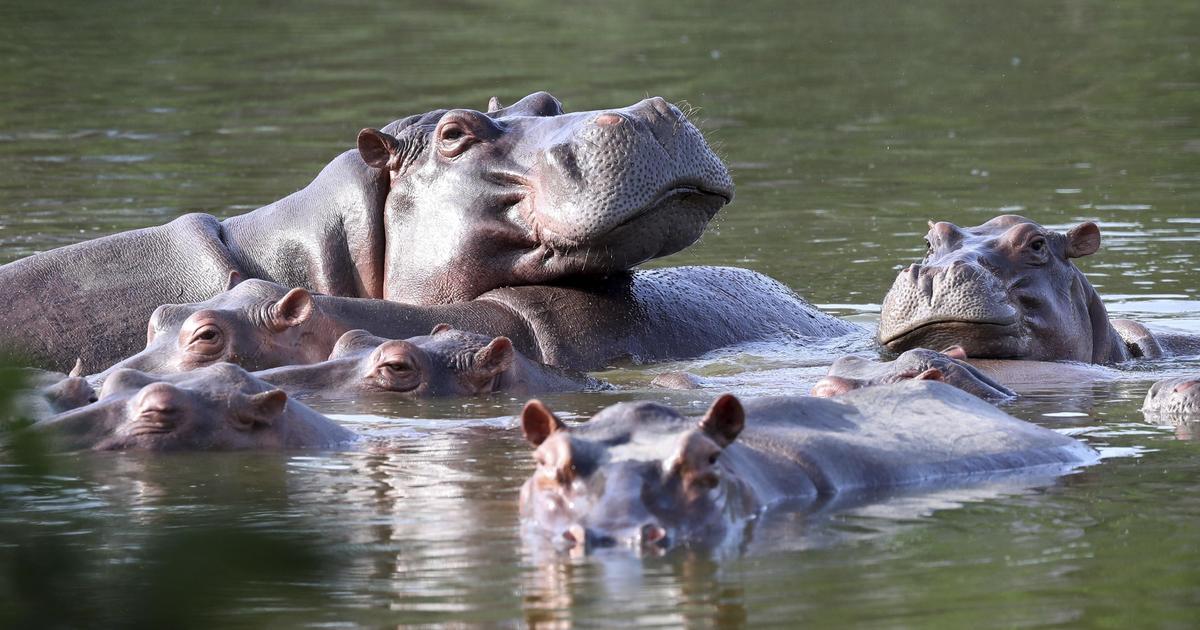
Pablo Escobar’s hippos are taking over the marshlands of Colombia — and need to face the same fate as their late owner before they become impossible to control, scientists have warned.

The so-called “cocaine hippos” were illegally imported to the country by the notorious drug lord, who was shot dead by authorities in 1993, the Telegraph reported.

But the rapidly breeding beasts have grown to become the largest invasive species on the planet — and could reach dangerous numbers in the next two decades.

“Nobody likes the idea of shooting a hippo, but we have to accept that no other strategy is going to work,” ecologist Nataly Castelblanco-Martínez told the outlet.

When Escobar was killed, authorities took control of his 7,000-acre estate, including a personal zoo.

While most of the animals found homes at zoos elsewhere, four of the hippos escaped.

With no real predators, there are anywhere between 80 and 100 descendants of Escobar’s former pets terrorizing the country’s lakes and rivers, the Telegraph reported.

Scientists have projected that the hippo population could surge to 1,500 by 2024.


The hippos pose a threat to the natural wildlife since their urine and feces are toxic, potentially sickening other species and even humans, the Telegraph reported.

David Echeverri Lopez, a government environmentalist, said they’re racing to castrate the critters before they take over.

“These hippos have become part of the local identity. But time is running out,” he said.

Others fear that there’s no other option than to slaughter them.
 
hmmm I read the opposite elsewhere, that they were becoming a reasonable part of the ecosystem, fitting in well and filling a niche. Not sure I trust the new one.

When infamous drug lord Pablo Escobar was shot and killed in 1993, he left behind a 9,000 pound problem at his luxurious Colombian ranch-turned-zoo, Hacienda Nápoles: Four adult hippopotamuses. There are now 80 hippos and their invasion has led to noticeable changes in the Colombian environment with recent research suggesting they're having a negative impact on waterways.

A new study, published in the journal Proceedings of the National Academy of Science on Monday, challenges that view, suggesting the hippos fill a unique ecological niche that has been lost since human occupation. The collaboration of international researchers examined how introduced herbivores, like Escobar's hippos in South America, wild boars in North America and camels in Australia, may help restore ecosystems to states last seen thousands years ago -- a concept known as "rewilding."

 
Last edited:
The real concern is are they delicious?
In the words of author and hunter Peter Hathaway Capstick, “It is my personal opinion that hippo meat is one of the finest of game foods … The taste is mild, less than lamb and more than beef, slightly more marbled than usual venison. It tastes exactly like, well, hippo.”

Link(Hippo is #9 on the list)

--Al
 
They're also an endangered species, with world population of less than 135K.
If these are causing a problem within the area's natural ecosystem, then they should be relocated to an ecosystem that is better suited for them to live freely and not cause any negative effects on the flora/fauna of their new home.
 
1634403671561.png

The Colombian government has begun sterilizing Pablo Escobar’s horny hippos to prevent the overly-fertile descendants of the late drug lord’s former pets from taking over the country’s marshlands.

Out of more than 80 hippos, 24 have been treated with in a chemical that makes them infertile, the BBC reports.

The hippos pose a threat to Columbia’s natural wildlife since their urine and feces are toxic, according to scientists.

Back in 1993, one male and three female hippos escaped from Escobar’s 7,000-acre jungle hacienda, between Medellin and Bogata, after the cocaine kingpin was shot dead by authorities.

Escobar’s zebras, elephants, ostriches, camels and giraffes all had found homes in zoos around the world. But the quartet of illegally imported hippos — reportedly the kingpin’s favorites — had better plans.

“It was logistically difficult to move them around, so the authorities just left them there, probably thinking the animals would die,” Colombian biologist Nataly Castelblanco told the BBC earlier this year.

Since then, the hippo population has swelled and taken over the countryside near the kingpin’s former ranch, Hacienda Nápoles.

What Does Hippopotamus Taste Like? Does Hippo Meat Taste Good?

Hunter-gatherers in Africa have been eating hippo meat for centuries.

The taste of the flesh is often described as being similar to beef, with a slightly sweet flavor and tough texture that can be improved by marinating it before cooking or smoking over an open fire. What makes hippo meat distinctive from other meats is the fat content.

The meat of a hippo has about three times more unsaturated fats than beef, which means that it can be cooked without any added oil or butter and still taste juicy – even if you’re cooking over an open fire with just coals from wood fires (a traditional method).

Hippopotamus also has less cholesterol in their flesh than other animals like cows do because they don’t produce as much LDL-cholesterol when compared to cattle who are fed corn diets for fattening purposes.

Traditionally, Africans have hunted hippos for their meat, but it’s not a common dish in the west.

Hippo is most often served as steaks or ground into hamburger-style patties that can be grilled and eaten like any other beef burger patty – though they’re usually much larger than your average cow burger.

The taste of this unusual animal varies depending on how you cook them; if cooked with spices such as cumin seeds then its flavor will resemble venison (deer).

While cooking without seasoning gives off more pork flavors because pigs are also omnivores who eat both plants & animals just to survive.

So when people compare these two types of meat side by each there aren’t too many differences between them.

Best Way to Cook Hippo Meat?

The hippo is an unusual animal, but there are many ways to cook it. One way is by grilling the steaks or ground patties over a fire, which gives it an almost barbecue-like flavor and texture that’s both juicy & tender on your palate.

Another option for cooking this unusual animal would be in stews like beef stew with vegetables such as potatoes carrots onions celery garlic peppers tomatoes etc., but you can also use other spices if desired.

It will be a little bit more difficult to cook the meat because it’s so tough, but with a few tricks, you’ll be able to make this animal taste delicious.

The first trick is by boiling or simmering for hours and then adding in some vegetables such as potatoes carrots onions celery garlic peppers tomatoes etc., which will help tenderize & flavor your dish.

The second tip would involve marinating overnight before cooking – if possible try using vinegar-based sauces like soy sauce that are high on acidity levels (which helps break down proteins).
1634404304966.webp
 
The offspring of hippos once owned by Colombian drug kingpin Pablo Escobar can be recognized as people or “interested persons” with legal rights in the US following a federal court order.

The case involves a lawsuit against the Colombian government over whether to kill or sterilize the hippos, whose numbers are growing at a fast pace and pose a threat to biodiversity.

An animal rights groups is hailing the order as a milestone victory in the long sought efforts to sway the US justice system to grant animals personhood status. But the order won’t carry any weight in Colombia where the hippos live, a legal expert said.

“The ruling has no impact in Colombia because they only have an impact within their own territories. It will be the Colombian authorities who decide what to do with the hippos and not the American ones,” said Camilo Burbano Cifuentes, a criminal law professor at the Universidad Externado de Colombia.
[....]
In the suit, attorneys for the Animal Legal Defense Fund asked the US district court in Cincinnati to give “interested persons” status to the hippos so that two wildlife experts in sterilization from Ohio could be deposed in the case.

In the suit, attorneys for the Animal Legal Defense Fund asked the US district court in Cincinnati to give “interested persons” status to the hippos so that two wildlife experts in sterilization from Ohio could be deposed in the case.

Federal magistrate judge Karen Litkovitz in Cincinnati granted the request on 15 October. The animal rights group based near San Francisco said it believes it’s the first time animals have been declared legal persons in the US.

Their attorneys argued that because advocates for the hippos can bring lawsuits to protect their interests in Colombia, the hippos should be considered “interested persons” under US law.

They pointed to a federal statute that allows anyone who is an “interested person” in a foreign lawsuit to ask a federal court to permit them to take depositions in the US in support of their case.

Christopher Berry, the lead attorney for the Animal Legal Defense Fund, called it a narrow but profound ruling.

“This really is part of a bigger movement of advocating that animals’ interest be represented in court,” he said. “We’re not asking to make up a new law. We’re just asking that animals have the ability to enforce the rights that have already been given to them.”

While animals have been granted legal rights in India, Pakistan and Argentina, courts in the US have been unwilling to do so until now.
[....]

 
Colombian officials on Monday authorized a plan to cull dozens of hippos roaming freely through a region in the center of the country, where they threaten villagers and displace native species years after notorious drug lord Pablo Escobar brought in the first ones.
Environment Minister Irene Vélez said previous methods to control the population of the so-called "cocaine hippos" have been expensive and unsuccessful, including neutering some of the animals or moving them to zoos. Vélez said up to 80 hippos would be affected by the measure. She did not say when hunting would begin.

"If we don't do this we will not be able to control the population," Vélez said. "We have to take this action to preserve our ecosystems."
Colombia is the only country outside of Africa with a wild hippo population. The hippos are the descendants of four brought to the country in the 1980s by Escobar as he built a private zoo in Hacienda Nápoles, a gigantic ranch in the Magdalena River valley with a private landing strip that served as his rural abode.

A study published by Colombia's National University estimated that around 170 hippos were roaming freely in the country in 2022.
Colombia has declared them an invasive species and experts have said sterilization alone is not enough to control the growth of the animals, which is why the government previously arranged for the possible transfer of hippos to overseas sanctuaries. But the cost of deporting the hippos is also expensive — an estimated $3.5 million.
Environmental authorities in Colombia say the mammals pose a threat to villagers who have encountered them in farms and rivers. They also compete for food and space against local species such as river manatees.

Independent journalist Audrey Huse, who has lived in Colombia for years, previously told CBS News that because the hippos roam freely, they end up killing fish and threatening endemic species like manatees, otters and turtles.
"Because they have no natural predators here, as they would in Africa, the population is booming an it's affecting the local ecosystem," Huse said. "Because they are such large animals, they consume considerable amounts of grassland and produce significant waste, which then poisons the rivers."
Animal welfare activists in Colombia have long opposed proposals to kill the hippos, arguing they deserve to live. They say that addressing the problem through violence sets a poor example for a country that has gone through decades of internal conflict.
Andrea Padilla, a senator and animal rights activist who helped draft a law against bullfights in Colombia, described the plan to cull the hippos as a "cruel" decision, and accused government officials of trying to take the easy way out.

"Killings and massacres will never be acceptable," Padilla wrote on X. "These are healthy creatures who are victims of the negligence" of government entities.
Over the past 12 years, spanning three presidential administrations, Colombia has tried to neuter some of the hippos in a bid to reduce their population. But the initiatives have had limited scope due to high costs that come with capturing the dangerous animals and performing surgeries on them.


Because Colombia's hippos come from a limited gene pool and could carry diseases, taking them back to their natural habitat in Africa has been considered unfeasible.

 
Back
Top