• You must be logged in to see or use the Shoutbox. Besides, if you haven't registered, you really should. It's quick and it will make your life a little better. Trust me. So just register and make yourself at home with like-minded individuals who share either your morbid curiousity or sense of gallows humor.
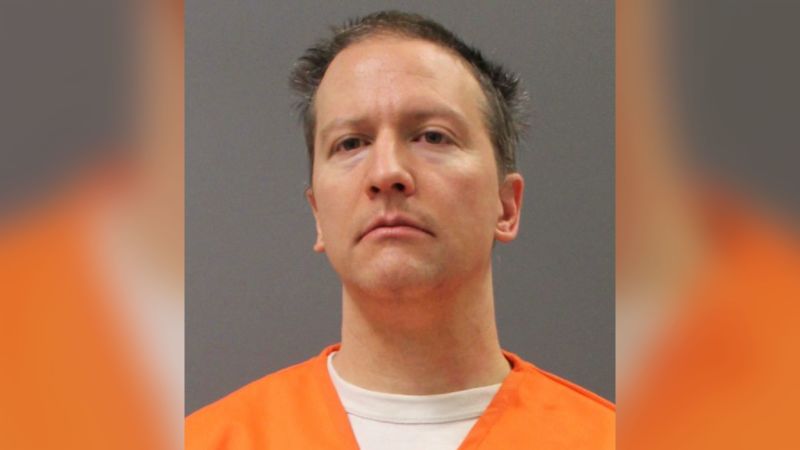
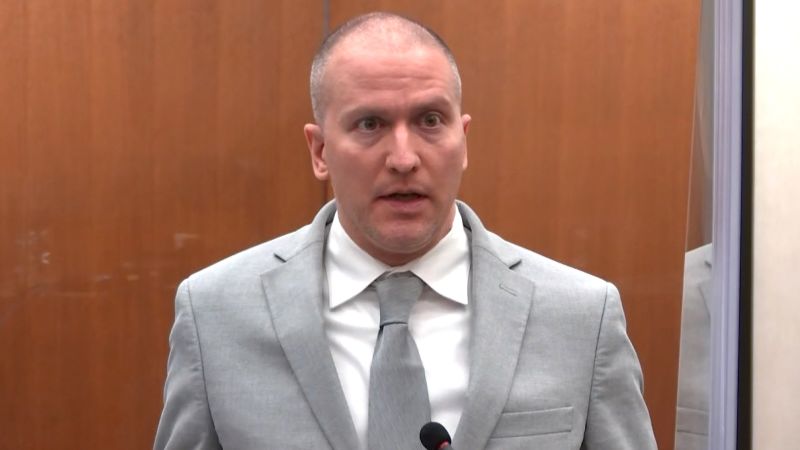
Derek Chauvin requests new trial, claims jury misconduct
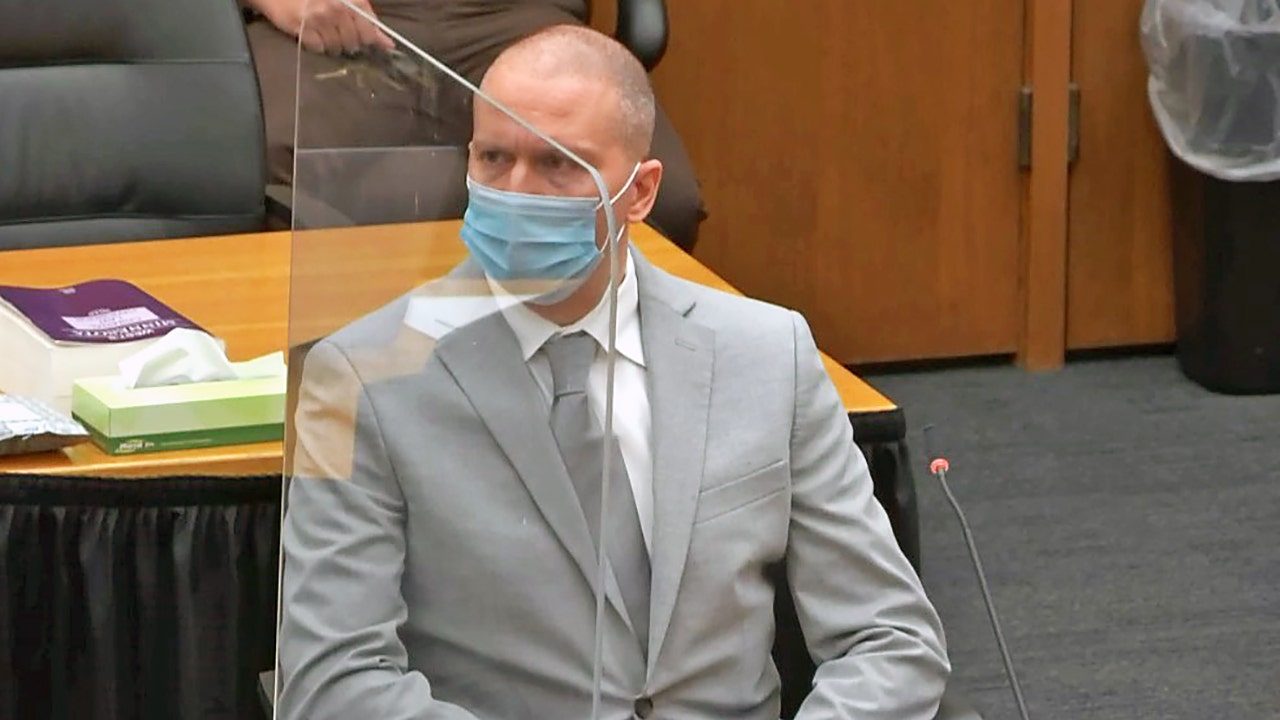
The lawyer for ex-Minneapolis cop Derek Chauvin is requesting a new trial in the death of George Floyd — claiming the guilty verdict against his client was tainted by a threatened and “intimidated” jury.

In papers filed Tuesday in Hennepin County Court, attorney Eric Nelson argues that Chauvin’s murder trial should have been moved to a different city, and said publicity surrounding the trial was “pervasive” and “prejudicial.”

“The court abused its discretion when it failed to sequester the jury for the duration of the trial, or in the least, admonish them to avoid all media, which resulted in jury exposure to prejudicial publicity regarding the trial during the proceedings,” Nelson wrote, “as well as jury intimidation and potential fear of retribution among jurors….”

Nelson also accused prosecutors and Hennepin County District Judge Peter Cahill of “multiple errors in these proceedings,” which he said deprived Chauvin of a fair trial.

Among his claims, Nelson said prosecutors “committed pervasive, prejudicial prosecutorial misconduct,” including “disparaging” the defense — and presenting “cumulative” evidence, particularly a string of experts and police officials who testified that Chauvin used excessive force.

The lawyer also claimed the judge should have forced Floyd’s pal, Morries Hall, to testify, despite Hall’s assertion that he would invoke his Fifth Amendment privilege if called to the witness stand.

Full Article:
 
MINNEAPOLIS (AP) — A Minnesota judge has ruled that there were aggravating factors in the death of George Floyd, paving the way for the possibility of a longer sentence for Derek Chauvin, according to an order made public Wednesday.
[....]
Judge Peter Cahill found that Chauvin abused his authority as a police officer when he restrained Floyd last year and that he treated Floyd with particular cruelty. He also cited the presence of children when he committed the crime and the fact Chauvin was part of a group with at least three other people.

Cahill said Chauvin and two other officers held Floyd handcuffed, in a prone position on the street for an “inordinate amount of time” and that Chauvin knew the restraint was dangerous.

“The prolonged use of this technique was particularly egregious in that George Floyd made it clear he was unable to breathe and expressed the view that he was dying as a result of the officers’ restraint,” Cahill wrote.

Even with the aggravating factors, legal experts have said, Chauvin, 45, is unlikely to get more than 30 years when he is sentenced June 25.
[....]
With Tuesday’s ruling, Cahill has given himself permission to sentence Floyd above the guideline range, though he doesn’t have to, said Mark Osler, professor at the University of St. Thomas School of Law. He said attorneys for both sides will argue whether an upward departure is appropriate and how long the sentence should be.

A pre-sentence investigation report will also be conducted. These are usually nonpublic and include highly personal information such as family history and mental health issues, as well as details of the offense and the harm it caused others and the community.

In arguing for the upward departure, prosecutors said Chauvin treated Floyd with particular cruelty during the lengthy restraint, saying Chauvin inflicted gratuitous pain and caused psychological distress to Floyd and to bystanders.
[....]

Cahill said when it became clear to bystanders that Floyd was in distress and stopped breathing, Chauvin continued to abuse his position of authority by not rendering aid.

In finding that Chauvin treated Floyd with particular cruelty, Cahill wrote: “The slow death of George Floyd occurring over approximately six minutes of his positional asphyxia was particularly cruel in that Mr. Floyd was begging for his life and obviously terrified by the knowledge that he was likely to die but during which the Defendant objectively remained indifferent to Mr. Floyd’s pleas.”

Defense attorney Eric Nelson disagreed with the state, saying that prosecutors did not prove that there were aggravating factors. He said Chauvin had legal authority to assist in Floyd’s arrest and was authorized under law to use reasonable force. He also said Floyd was not particularly vulnerable, saying he was a large man who was struggling with officers.

Nelson also argued Floyd was not treated with particular cruelty, saying that there is no evidence that the assault perpetrated by Chauvin involved gratuitous pain that’s not usually associated with second-degree murder.
[....]
Chauvin has also been indicted on federal charges alleging he violated Floyd’s civil rights, as well as the civil rights of a 14-year-old he restrained in a 2017 arrest. If convicted on those charges, which were unsealed Friday, a federal sentence would be served at the same time as Chauvin’s state sentence. The three other former officers involved in Floyd’s death were also charged with federal civil rights violations; they await trial in state court on aiding and abetting counts.

 
Convicted murderer Derek Chauvin says he should get Probation instead of Prison

Former Minneapolis police officer and convicted murderer Derek Chauvin on Wednesday filed court papers in search of a lighter sentence in the killing of George Floyd, Jr.

Chauvin’s proposed sentence is to walk out of jail later this month on time served and to face the rest of his punishment on “stringent” terms of probation. Among his proffered reasons for the softer sentence: he’s the “product of a ‘broken’ system” and can still remain an “an asset to the community.”

Prosecutors on Wednesday countered that Chauvin should be sentenced to thirty years behind bars.

Chauvin’s latest arguments come after Judge Peter Cahill ruled that Chauvin is eligible for a tougher-than-usual sentence. Cahill said Floyd was “terrified by the knowledge that he was likely to die” and that Chauvin remained “indifferent” and “abused a position of trust and authority” as a police officer.

Cahill also ruled that Chauvin “treated George Floyd with particular cruelty” while children were present” and that Chauvin “committed [his] crime . . . with the active participation of at least three other persons.” All of those factors, Cahill ruled, left Chauvin eligible for an “upward sentencing departure” — above what the courts would normally dole out for a defendant convicted of second-degree murder yet who had no prior criminal history.

... article continues

Law & Crime Convicted Murderer Derek Chauvin Says He Should Get Probation Instead of Prison Because the System Is ‘Broken’
 
Last edited:
I mean really, does this souless creature who most apparently came into the world with a complete absence of humanity for his fellows think he is the best judge of what his sentence should be?

He wants to walk out of jail with probation and go back as an asset to the community. Bwaaah, I don't think the community would ever term him as an asset and they sure as hell don't want an animal like that back in their community I guess he didn't catch the cheers and tears from that community when he was found guilty on all counts..
 
Former Minneapolis Police officer Derek Chauvin has been sentenced to 22.5 years in prison for the murder of George Floyd.

Chauvin was convicted of second and third-degree murder, as well as second-degree manslaughter.

Hennepin County Judge Peter Cahill handed down the sentence Friday afternoon in a Minneapolis courtroom.

 
Former Minneapolis Police officer Derek Chauvin has been sentenced to 22.5 years in prison for the murder of George Floyd.

if a guy, especially a black guy, were to suffocate a cop to death over 10 minutes, they would death penalty him so fast. Or he wouldn't make it to a court room, having been shot dead. or beat to death.

i think the george floyd murderers should have gotten BULLET. vs 22 years.
 
Derek Chauvin -- the former Minneapolis police officer convicted in April of murder and manslaughter for the death of George Floyd -- is reportedly nearing a plea deal on federal civil rights charges that would allow him to avoid spending the rest of his life in prison.
[....]
Multiple sources told WCCO that federal prosecutors were in talks with Chauvin about the plea deal and that both parties were close to an agreement. It could arrange for Chauvin to get 20 to 25 years -- and for him to serve that federal sentence at the same time as his state sentence.
[....]
The plea deal would likely require Chauvin to publicly explain what he did to Floyd and why, WCCO reported. At the sentencing hearing, Floyd’s brother, Terrence Floyd, asked Chauvin the same question.

"We don’t want to see no more slaps on the wrist. We’ve been through that already," Terrence Floyd said. "What was going through your head when you had your knee on my brother’s neck?"

The plea deal could also arrange for Chauvin to serve his sentence in federal prison – rather than at a state-run facility, WCCO reported. If Chauvin goes to trial on civil rights charges and is convicted in federal court, he could be sentenced to life in prison.

Cahill on Friday went beyond the 12 1/2-year sentence prescribed under state guidelines, citing Chauvin's "abuse of a position of trust and authority and also the particular cruelty" shown to Floyd.
[....]
Floyd family attorney Ben Crump said the family had gotten "some measure of accountability" but is hoping Chauvin gets the maximum at his upcoming federal civil rights trial. Crump said this was the longest sentence a police officer has ever received in Minnesota.

But he added: "Real justice in America will be Black men and Black women and people of color who will not have to fear being killed by the police just because the color of their skin. That would be real justice."
[....]

 
(CNN)Former Minneapolis police officer Derek Chauvin plans to appeal his conviction earlier this year on charges in the murder of George Floyd.

According to a court filing Thursday, Chauvin aims to appeal based on 14 issues with his case, claiming the court in which he was tried repeatedly "abused its discretion" for numerous reasons, including by denying Chauvin a change of venue, denying his motion to have the jury sequestered through trial, and denying his request for a new trial.
[....]
In an affidavit also filed Thursday, Chauvin said he currently did not have a lawyer after the Minneapolis Police and Peace Officers Association, which paid for his trial attorney, told Chauvin their "obligation" to pay for his legal representation "terminated upon my conviction and sentencing."

Chauvin is currently without any income "besides nominal prison wages," he wrote, and so he cannot afford private counsel for his appeal. However, when he applied for a Minnesota appellate public defender, he was denied representation, Chauvin wrote.

Chauvin has since submitted documents to the Minnesota Supreme Court and asked that his deadline for an appellate brief filing be stayed until the court reviews his application. Typically, Chauvin would have 90 days from the imposition of his sentence to file an appeal.

Reached for comment, John Stiles, the deputy chief of staff for Minnesota Attorney General Keith Ellison -- who led the prosecution of Chauvin -- told CNN the office is currently reviewing Chauvin's filing.
[....]
Chauvin's filing Thursday also takes issue with the fact the court did not allow him to strike jurors he says were "clearly biased" in voir dire, the process in which prospective jurors are questioned and screened before being selected. Additionally, the filing says the court abused its discretion by allowing only limited evidence from a 2019 encounter between Floyd and police.

Chauvin and the three other former Minneapolis officers present in Floyd's death face separate federal charges for allegedly violating Floyd's constitutional rights. Chauvin was also charged in a separate indictment related to the use of unreasonable force on a 14-year-old in September 2017. He pleaded not guilty in that case earlier this month.

 
Former Minneapolis police Officer Derek Chauvin pleaded guilty Wednesday to federal charges of violating George Floyd’s civil rights, averting a trial but likely extending the time he is already spending behind bars on a state conviction.

Chauvin, who is white, was convicted this spring of state murder and manslaughter charges for pinning his knee against Floyd’s neck during a May 25, 2020, arrest as the Black man said he couldn’t breathe Chauvin was sentenced to 22 1/2 years in that case.

The federal charges included two counts alleging that Chauvin deprived Floyd of his rights by kneeling on his neck as he was handcuffed and not resisting, and then failing to provide medical care.

Chauvin appeared in person Wednesday for the change of plea hearing in an orange short-sleeve prison shirt. He said “Guilty, your honor” to confirm his pleas.

Federal prosecutors recommended up to 300 months, or 25 years, in prison. A judge will determine his sentence later, but a 25-year federal sentence would likely extend Chauvin’s time behind bars by about six years if he earns credit for good behavior.

Three other former officers — Thomas Lane, J. Kueng and Tou Thao — were indicted on federal charges alongside Chauvin earlier this year. They are still on course for trial early next year on those charges, with a state trial still to come.
 

Three former Minneapolis cops found guilty of violating George Floyd’s civil rights​

Three former Minneapolis cops were found guilty of violating George Floyd’s civil rights in a federal trial Thursday when they failed to intervene as Derek Chauvin fatally leaned on Floyd’s neck for almost 10 minutes.

Former Officers Tou Thao, Thomas Lane, and J Kueng were charged with depriving Floyd of his civil rights for not providing Floyd medical care during the May 25, 2020 fatal arrest.

Kueng, who is black, knelt on Floyd’s back; Lane, who is white, restrained his legs; and Thao, who is Hmong American, stopped concerned citizens from intervening as Floyd, 46, struggled to breathe and begged for his life.

The three former cops could face up to life in prison and will remain free on bond until their sentencing. No date has been set for that.

Sixteen of the 18 people selected as jurors and alternates in the case appeared to be white, while the other two appeared to be Asian. Federal court officials declined to release the demographic of the panel.Judge Paul Magnuson insisted that religion, race and ethnicity had “absolutely nothing” to do with the high-profile case. Magnuson also ordered the names of the jurors to be sealed for the next decade.

Throughout the trial, prosecutors worked to show the cops’ indifference to Floyd’s suffering, highlighting their failure to provide him CPR. Bystanders were begging the officers to check Floyd’s breathing, yet the trio who had training in how to respond in these situations did nothing, prosecutors said.

To win, prosecutors had to prove that Lane, Thao and Kueng willfully deprived Floyd of his constitutional rights, which the jurors ultimately agreed they did.
 
(CNN)Former Minneapolis police officer Derek Chauvin has asked the state Court of Appeals to overturn his conviction for the 2020 murder of George Floyd, according to an appeal filed Monday.

The 82-page filing lists more than a dozen aspects of the case and trial that Chauvin's attorney argues tainted the proceedings and rendered them "structurally defective," including extensive pretrial publicity and protests outside the courthouse, as well as the city's announcement during jury selection that it would pay a $27 million settlement to Floyd's family.

Among the issues Chauvin and his attorney, William F. Mohrman, are asking the appeals court to review, are whether the venue should have been changed, the jury fully sequestered, or the trial delayed because of pretrial protests and media coverage.

The appeal also accuses prosecutors of misconduct, alleging the state's attorneys failed to properly disclose discovery information and adequately prepare prosecution witnesses.
[....]
The appeal filing argues Chauvin's conviction should be overturned or the court should order a new trial in a different venue, saying the court proceedings were "so pervaded by error, misconduct and prejudice that they were structurally defective." The filing also argues Chauvin was not given his constitutional right to due process and a fair trial.

If the conviction is upheld, the appeal filing says, the court should reduce Chauvin's sentence to be within the state's sentencing guidelines.

The former officer was sentenced to 22 and a half years in prison, which exceeded Minnesota's sentencing guideline range of 10 years and eight months to 15 years.

At the time of sentencing, Judge Peter Cahill wrote in a memorandum that the case warranted a harsher sentence because Chauvin "abused his position of trust and authority" and treated Floyd "without respect and denied him the dignity owed to all human beings."

 
ST. PAUL, Minn. (AP) — The judge overseeing the federal civil rights cases of four former Minneapolis police officers in the killing of George Floyd said Wednesday that he has accepted the terms of Derek Chauvin's plea agreement and will sentence him to 20 to 25 years in prison.

Chauvin pleaded guilty Dec. 15 to violating Floyd’s civil rights, admitting for the first time that he kept his knee on Floyd’s neck — even after he became unresponsive — resulting in the Black man’s death on May 25, 2020. The white former officer admitted he willfully deprived Floyd of his right to be free from unreasonable seizure, including unreasonable force by a police officer.

Under the plea agreement, which Chauvin signed, both sides agreed Chauvin should face a sentence ranging from 20 to 25 years, with prosecutors saying they would seek 25. He could have faced life in prison on the federal count. With credit for good time in the federal system, he would serve from 17 years to 21 years and three months behind bars.

U.S. District Judge Paul Magnuson deferred accepting the agreement pending the completion of a presentence investigation. He said in a one-page order Wednesday that the report had been issued, so it was now appropriate to accept the deal. He has not set a sentencing date for Chauvin.
[....]


Derek Chauvin slapped with 21 years more prison time in George Floyd murder​

Derek Chauvin, the former Minnesota police officer who killed George Floyd in 2020, was sentenced Thursday to 21 years in federal prison for violating his civil rights.

Federal Judge Paul Magnuson blasted the disgraced ex-cop from the bench before handing down the steep sentence, which will run concurrently with the more than 22 years Chauvin is already serving on state convictions of murder and manslaughter.

“I really don’t know why you did what you did,” the judge told Chauvin. “To put your knee on a person’s neck until they expired is simply wrong. … Your conduct is wrong and it is offensive.”

Because of federal parole policies, Chauvin will likely serve more time behind bars than if he served only his sentence imposed by the judge in his state case.

The ex-cop will also be transferred from Minnesota’s only maximum security state prison to federal prison because of the conviction.
 
A Minnesota county approved a nearly $1.5 million settlement of a racial discrimination lawsuit filed by eight minority correctional officers who said they were barred from guarding Derek Chauvin, the former Minneapolis police officer found guilty in George Floyd's death.

The officers — who identify as Black, Hispanic, Pacific Islander American and multiracial — alleged that a superintendent at the Ramsey County Adult Detention Center in St. Paul reassigned officers of color to another floor when Chauvin was arrested in May 2020.

They said in the suit, filed last year, that the superintendent's actions "segregated" them and prevented them from doing their jobs "because of the color of their skin."
[....]
The suit alleged that then-jail Superintendent Steve Lydon barred minority officers from guarding Chauvin and said they could not interact with him or even be on the floor where he was being held.
[....]
One of the plaintiffs, Devin Sullivan, said in the lawsuit that he regularly processed and booked high-profile inmates. While he was patting down Chauvin, Lydon told him to stop and replaced him with a white officer, the suit said.

The lawsuit further alleged that Chauvin received special treatment from a white lieutenant. The suit said two officers saw on security cameras that a white lieutenant was allowed access to Chauvin's cell unit, sat on his bed, patted his back "while appearing to comfort him" and let him use a cellphone.

At the time, several of the minority officers asked to speak with Lydon about what was happening. Lydon "denied he was racist and defended his decision," the lawsuit said.
[....]
"Our goal in bringing attention to the segregation order was to ensure Ramsey County was held accountable for its discriminatory actions and practices. We hope the County and Detention Center will continue working toward overall culture changes that create a safe and welcoming work environment for all," the statement read.

Lydon could not be reached for comment at phone numbers listed for him. He has previously said he removed the officers "to protect and support" them by shielding them from Chauvin, according to the Star Tribune. Lydon was later removed as superintendent, the newspaper reported.

 
Derek Chauvin has been moved from a Minnesota state prison where he was often held in solitary confinement to a medium-security federal prison in Arizona, where the former police officer convicted in George Floyd’s killing may be held under less restrictive conditions.

Chauvin was taken Wednesday from a maximum-security prison in a Minneapolis suburb, where he often spent most of his day in a 10-by-10-foot cell, to the Federal Correctional Institution in Tucson, according to the Bureau of Prisons.

The Tucson facility houses 266 inmates, both male and female, as part of a larger complex that includes a high-security penitentiary and a minimum-security satellite camp.
[....]
Experts said earlier that Chauvin was likely to be safer in the federal system. It typically houses less-violent inmates, and he’d be less likely to mix with inmates he had arrested or investigated as a Minneapolis police officer.
[....]
The federal prison system does house many high-profile inmates, but it is also plagued by gangs and chronic violence. The entire federal prison system was put on a nationwide lockdown in January after two inmates were killed and two others were injured during a gang altercation at a federal penitentiary in Texas.

The Bureau of Prisons has also faced increasing scrutiny of violent incidents and serious misconduct in its ranks. Associated Press investigations have uncovered abuse, neglect and leadership missteps, including rampant sexual abuse by workers, severe staffing shortages, inmate escapes and the mishandling of the COVID-19 pandemic.
[....]

 
Back
Top