Sevens My Charm
Ruler of Minions.. and Degenerates..
Maybe they'll get decent sentencing!?
You must be logged in to see or use the Shoutbox. Besides, if you haven't registered, you really should. It's quick and it will make your life a little better. Trust me. So just register and make yourself at home with like-minded individuals who share either your morbid curiousity or sense of gallows humor.
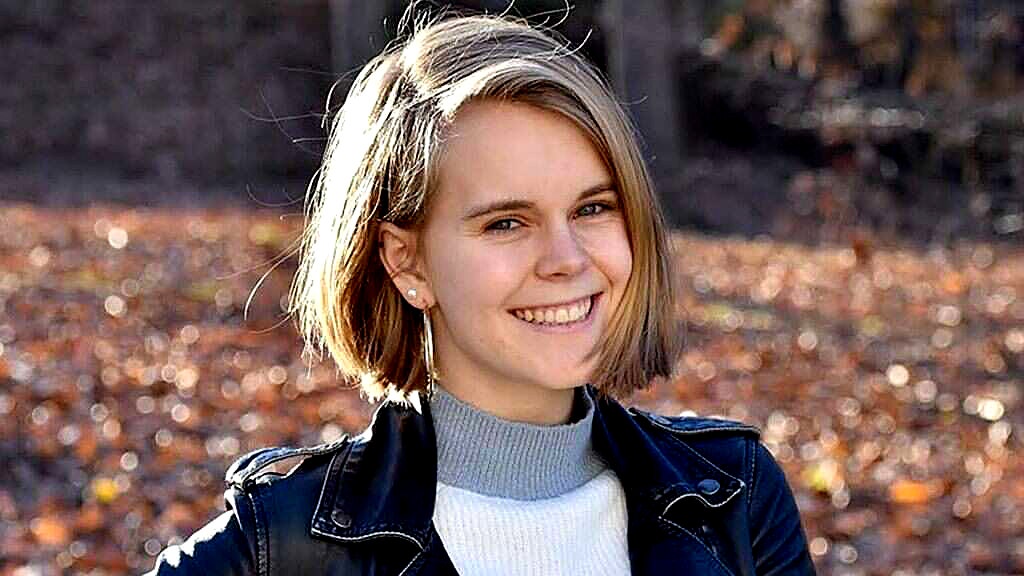
The shattered father of Barnard student Tessa Majors described the family’s “immeasurable pain” on Thursday — as a judge sentenced one of her killers to the maximum of nine years to life in prison.
“On December 11, 2019, the hopes and dreams for our daughter Tess came to a tragic end,” read Assistant District Attorney Matthew Bogdanos on behalf of Inman Majors, who wept in the gallery in Manhattan Supreme Court.
“Nearly two years later, we still find words inadequate to describe the immeasurable pain, trauma, and suffering that our family has endured since her senseless murder,” the father wrote. “Tess was a brilliant student, a voracious reader, a poet and a fledgling journalist. She had big dreams.”
But that all ended after the college freshman encountered Luchiano Lewis, now 16, and his friends.
Lewis and two middle school pals — Rashaun Weaver, then 14, and Zyairr Davis, then 13 — stabbed Majors, 18, to death during the botched robbery in Morningside Park.
“Our hearts ache as we watch Tess’ friends return to school, perform concerts, start new jobs, and experience all the things that our daughter never will,” he wrote in the heartbreaking statement. “It is hard for many old friends to be around us. Our grief is too profound. We are too changed from the people we used to be.”
Weaver was the first to attack the college freshman after she passed the trio while staring down at her phone. He ran up behind her and kicked her hard in the back. A tussle ensued and Majors bit Weaver, then yelled for help.
That’s when Lewis allegedly held her in a headlock, and Weaver repeatedly stabbed her, piercing her heart, and sending the feathers of her down coat into the air.
Lewis pleaded guilty last month to second-degree murder and first-degree robbery.
“The murder of Tessa Majors tore at the fabric of this entire city,” said Manhattan Supreme Court Justice Robert Mandelbaum.
The judge pointed to Lewis’ poor track record in jail — including possessing contraband and participating in a violent slashing of another inmate for taking a blanket that he wanted.
“Sadly and troubling, the defendant has learned no lesson,” Mandelbaum said before handing down the hefty term — the maximum for his age.
Bogdanos played a short video that showed the aftermath of the trio’s handiwork. Majors is shown stumbling toward a lamppost and collapsing on the ground, where she died.
Lewis’ defense lawyer requested the minimum before turning the floor over to her client.
“As a human, I feel ashamed, embarrassed and sad,” Lewis, slumped in his chair, told the court, without looking at Majors’ father. “I am not the monster you once thought I was.”
The teen saved his final words for his own father, who was also present.
“Dad, I am sorry I failed you,” he said. “I promise I will make you proud again.”
Davis, who was charged as a juvenile delinquent, was the first defendant to plead guilty in the case. He copped to one count of first-degree robbery in 2020 and was sentenced to 18 months in detention.
The teen who stabbed New York City college student Tessa Majors to death in 2019 during a shocking botched robbery pleaded guilty to murder Thursday in Manhattan Supreme Court.
Rashaun Weaver and Luchiano Lewis, then both 14, and another middle school pal Zyairr Davis, then 13, went to Morningside Park the night of Dec. 11 to rob people, court papers allege.
Weaver is charged in three separate cases and copped to the top count in each. He pleaded guilty to second-degree murder for Majors' killing.
Weaver copped to one count of first-degree robbery for a crime committed four days before the stabbing death of Majors. He and Lewis allegedly robbed a stranger, at knifepoint, of his iPhone XR in Morningside Park.
In exchange for his guilty pleas, Weaver was promised a sentence of 14 years to life – significantly less than the maximum of 21 years to life.
Lewis was sentenced to nine years to life in prison last month, the maximum under the law, after pleading guilty to second-degree murder and first-degree robbery.
Davis, who was charged as a juvenile delinquent, copped to one count of first-degree robbery in 2020 and was sentenced to 18 months in detention.
The shattered parents of slain Barnard College student Tessa Majors detailed their daughter’s dying moments, saying they miss her “every second of every day” — as the last of her three attackers was sentenced to 14 years to life on Wednesday.
Inman and Christy Majors wrote in a victim statement that they “have no idea what it is like to experience what [Tess] experienced” when she was stabbed to death by then-14-year-old Rashaun Weaver on the evening of Dec. 11, 2019.
“The family of Tess Majors misses her every second of every day and will continue to do so as long as they are living and sentient,” said the statement, read in Manhattan Supreme Court by Assistant District Attorney Matthew Bogdanos, as her parents looked on from the gallery.
“Their pain is immeasurable and does not go away.”
Weaver and two middle school pals — Luciano Lewis and Zyairr Davis, then 14 and 13, respectively — killed Majors during a botched robbery in Morningside Park, in a case that rattled New York City.
The troubled teen was the first to attack Majors after she passed the trio while staring down at her phone. He ran up behind her and kicked her hard in the back.
As the teen muggers descended on Majors, she fought for her life, at one point biting Weaver in the finger — causing him to fly into a rage.
That’s when Lewis held Majors in a headlock, and Weaver repeatedly knifed her, piercing her heart, and sending the feathers of her down coat into the air.
The parents, who sat stoically in the front row, have “no idea what it is to fight with three males — all of them larger than she — for over a minute, escaping two times only to be surrounded and targeted again,” their statement said.
Her parents said they “have no idea what it is like to stumble up a long flight of stairs after being stabbed multiple times in the chest, her phone still in her hand.”
“They have no idea what it’s like to try and hail an Uber ride while sitting on a city bench after being stabbed. No idea what it is like to bleed to death on a New York City street in the presence of strangers next to a security booth,” the statement said.
Davis, who was charged as a juvenile delinquent, was the first defendant to plead guilty in the case. He copped to one count of first-degree robbery in 2020 and was sentenced to 18 months in detention.
Lewis pleaded in September to second-degree murder and first-degree robbery and was sentenced the following month to the maximum of nine years to life in prison.
Now 16, Weaver was the third and final suspect in the shock slaying to be sentenced, finally bringing the case to a close after more than two years.
Bogdanos told the court that Weaver “repeatedly committed crimes” and acts of violence, including a knifepoint robbery in the same park four days earlier.
During the mugging of Majors, Weaver “didn’t just attack her once,” Bogdanos said, detailing how the trio came after the college freshman three times in the park as she tried to escape.
“He didn’t just stab her once,” Bogdanos said. “He stabbed her four times. Four times in the chest.”
The prosecutor also said Weaver didn’t appear remorseful in the immediate aftermath, filming himself on his phone the next night while smoking weed he’d stolen from Majors.
“Yes 14 years to life is a long time,” Bogdanos said, “but at the end of his sentence Rashaun Weaver goes home. Tess never will.”
Weaver’s pro bono lawyer, Jeffrey Litchman, the high-profile attorney who defended Joaquin “El Chapo” Guzman, said his client had expressed remorse hundreds of times in the years since the killing.
He described Weaver as “a symptom rather than cause of a broken system,” saying the boy was born while his dad was incarcerated and had a “turbulent childhood,” growing up in public housing and homeless shelters.
“All of the role models in his life have been to prison,” Litchman said.
Weaver, who was brought into court with his hands cuffed behind his back, wearing a burgundy shirt and black tie, thanked his family for standing by him, telling them, “you continue to love me as society hates me.” Several of his relatives were present and one yelled out “I love you bro,” as Weaver was led away after the hearing.
The teen also addressed the court and apologized, saying: “I’d give anything to go back in time so that it never happened.”
“Nothing I will say or do for the rest of my life will make up for the harm and pain I have caused,” Weaver told them, vowing to use his time behind bars to “become a better person” and to help kids with similar backgrounds “understand life doesn’t have to be hopeless.”
“I want to be more than a statistic,” he said.